
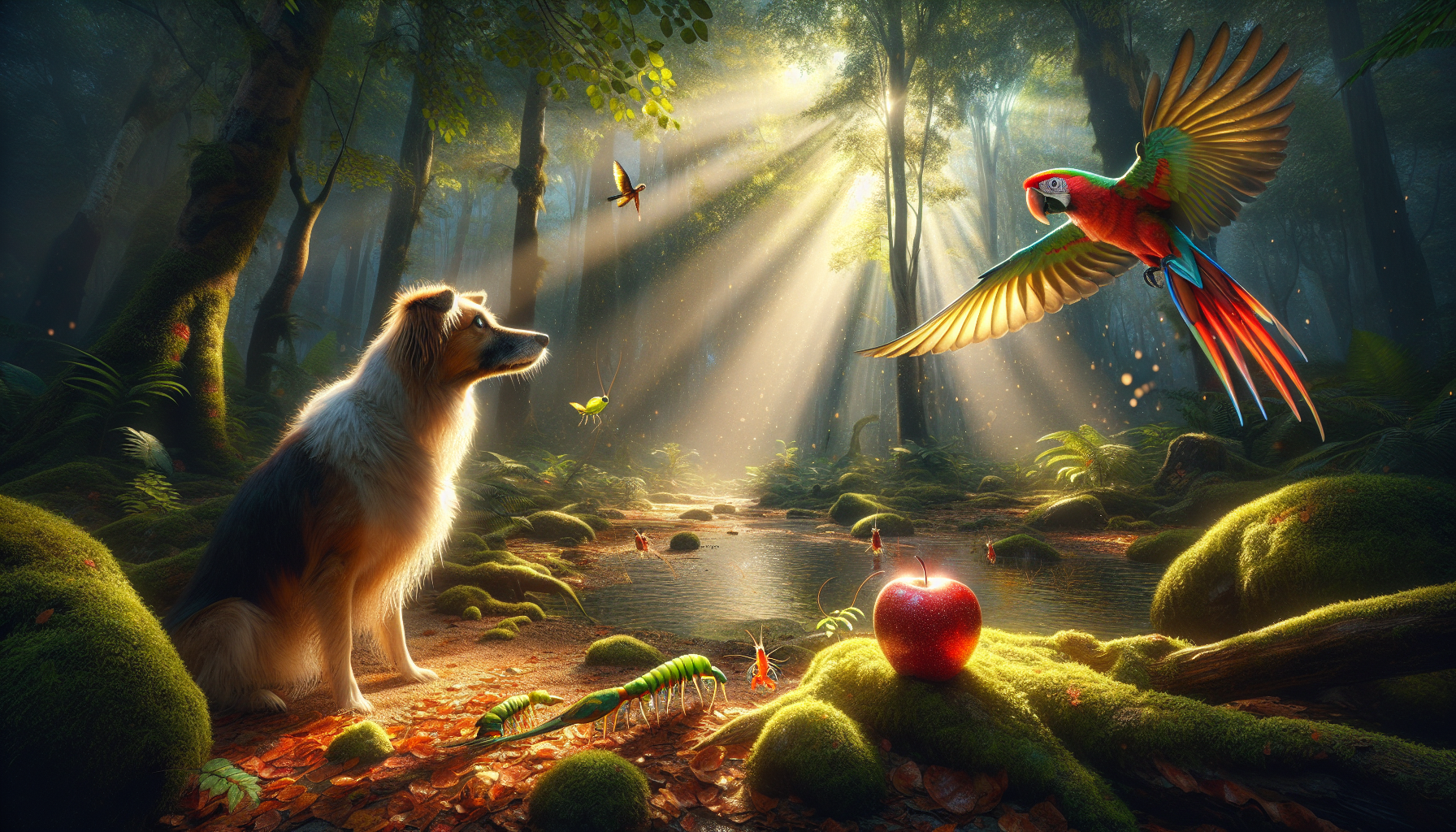
Exploring the World Through the Eyes of Animals
Have you ever considered how perception shapes our understanding of reality? When you gaze at a luscious red apple, do you see the same vibrant hue as your friend does? Our personal perception of color is profoundly subjective, influenced by biological factors and cultural experiences. However, when we shift our focus to the animal kingdom, the questions regarding color perception become even more intriguing. How do various species view the world, and what unique perspectives do they possess that remain hidden from human eyes?
How Different Species Experience Color
One of the most fascinating areas of research involves the differences in color perception between humans and other animals, particularly dogs. Studies indicate that dogs are somewhat colorblind by human standards, unable to differentiate between shades of red and green. This limitation contrasts starkly with the visual capabilities of certain birds and insects, such as bees. These remarkable creatures have the ability to see into the ultraviolet spectrum, granting them access to a realm of color that is beyond human comprehension.
Advanced Visual Capabilities
The enchanting idea of replicating animal vision has emerged as a cutting-edge field of exploration among researchers. Utilizing specially calibrated cameras that can detect not only blue, green, and red light but also ultraviolet rays, scientists are beginning to recreate how different species perceive their surroundings. This blend of technology and biology aims to narrow the gap between human and animal perspectives, allowing us to gain insights into their extraordinary worlds.
The Wonder of Enhanced Perception
One of the most compelling aspects of this ongoing research lies in its implications for understanding the sensory experiences of sophisticated creatures such as the mantis shrimp, which is equipped with an astounding 12 to 16 types of photoreceptors. This unparalleled complexity raises questions about how such animals interpret their environments. Interestingly, not all creatures with advanced visual traits possess superior color perception. For instance, snakes can detect infrared light, allowing them to sense warmth, yet they operate under a different paradigm of perception than mammals.
Despite the varying evolutionary adaptations across species, a common question arises: do animals dream in color, as we do? While this question remains unanswered, it ignites curiosity about how visual experiences may differ among various species. Is it possible that a dog perceives its dreams in sepia tones, while a parrot navigates through a vivid array of colors?
The Future of Analyzing Animal Vision
As research continues to advance, the potential for uncovering the complexities of animal color perception appears boundless. With ongoing technological innovations, we are gradually unlocking the secrets of how different species visualize their world. This evolving understanding not only enriches our appreciation for nature but also reinforces our obligation to protect the diverse species that share our planet.
For a more in-depth exploration of animal vision and its multifaceted dimensions, consider utilizing reputable resources like National Geographic or Science Magazine for insightful articles on this captivating subject.
Related Reading

Source: www.popculturenonsense.com