
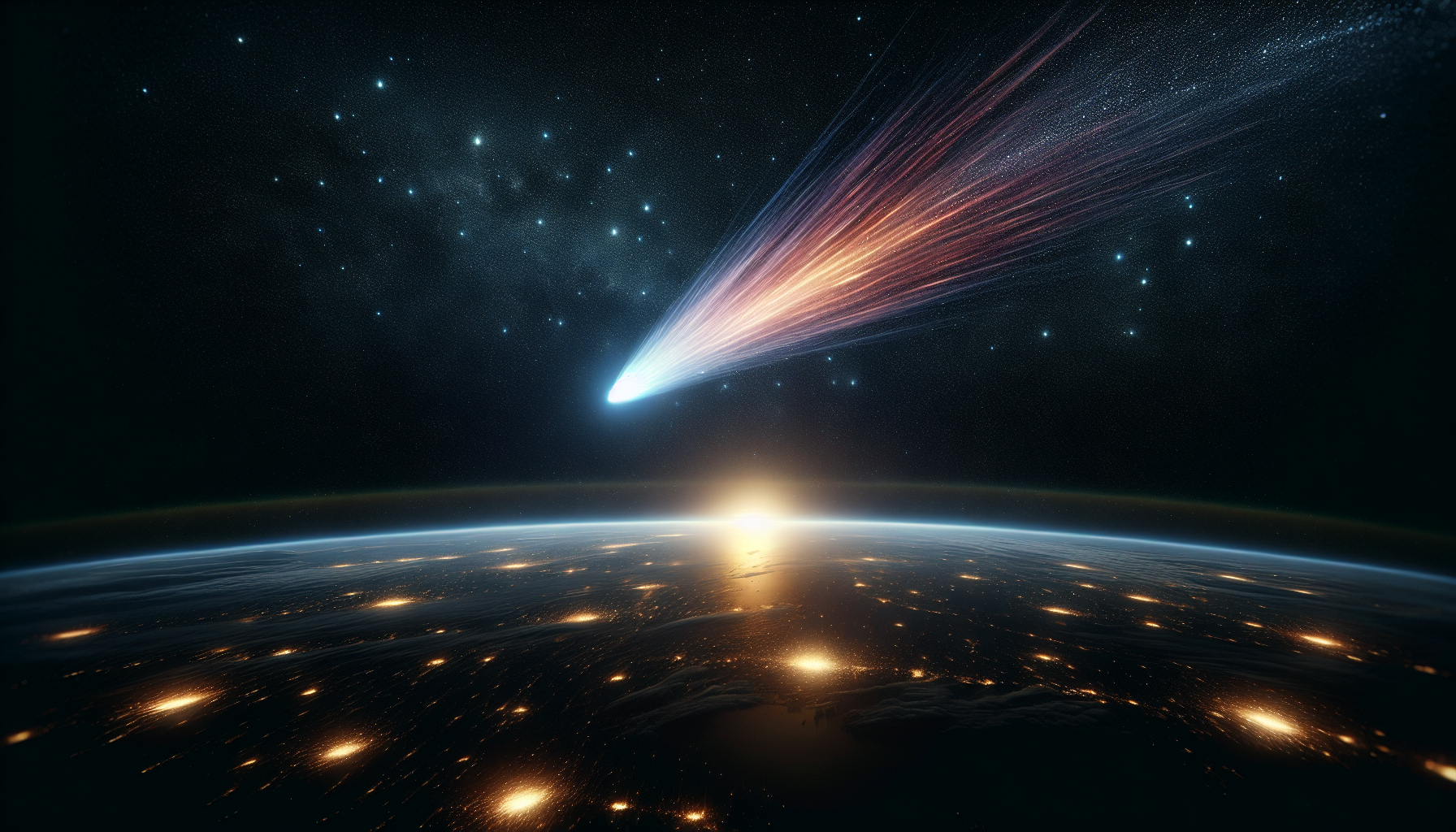
The “Alien” Comet’s Close Encounter with Earth
This week in the world of science, all heads turned as the mysterious “alien” comet made its closest approach to Earth, a mere 168 million miles away. This interstellar visitor has been zipping through our solar system, capturing the imagination of astronomers and enthusiasts alike.
Is It Really Aliens?
While some theorists, including a prominent figure from Harvard, have held onto the idea of extraterrestrial origins, many experts have dismissed this notion. They assert that this comet is simply a natural celestial body, no aliens involved. The scientific community generally agrees that empirical data clearly supports the idea that this comet is adhering to the laws of physics, so let’s leave the alien theories behind for now.
Not Just About Comets: Other Scientific Developments
This week has had its share of exciting developments beyond this interstellar encounter:
- Planetary Discovery: An unusual planet, shaped strikingly like a lemon, was discovered. With an atmosphere reaching up to 3,000 degrees, it is heated uniformly by gravitational forces from its sun, creating this bizarre shape.
- GPS Concerns: Research indicates that a significant solar storm could wreak havoc on satellites orbiting Earth. A recent study estimates there’s a 30% chance that such an event could trigger a catastrophic series of collisions among the 14,000 satellites in low-Earth orbit.
- Understanding Online Behavior: A revealing study shows that only 3% of users on Reddit post toxic comments, despite a widespread belief that the figure is substantially higher. Interestingly, these 3% account for a staggering one-third of all comments on the platform.
Scientific Breakthroughs Over the Years
Reflecting on past achievements, National Geographic recently compiled a list highlighting significant scientific breakthroughs from the last 25 years. If you were wondering what made the cut, it includes:
- Gene-editing technology
- The first three-parent baby
- The first photograph of a black hole
- Direct evidence of feathered dinosaurs
What Lies Ahead?
Looking toward the future, predictions for 2026 suggest that we may witness the emergence of “A.I. scientists.” These artificial intelligence programs could facilitate groundbreaking discoveries, as noted by Nature.com. The consensus is clear: the next few years could herald significant advancements fostered by technology.
Wrapping Up
As we observe celestial events like the alien comet and remain vigilant about our technological landscape, it’s vital to stay informed. Each new find expands our understanding of the universe and our place in it. Let’s continue to explore, innovate, and question.
Related Reading
