
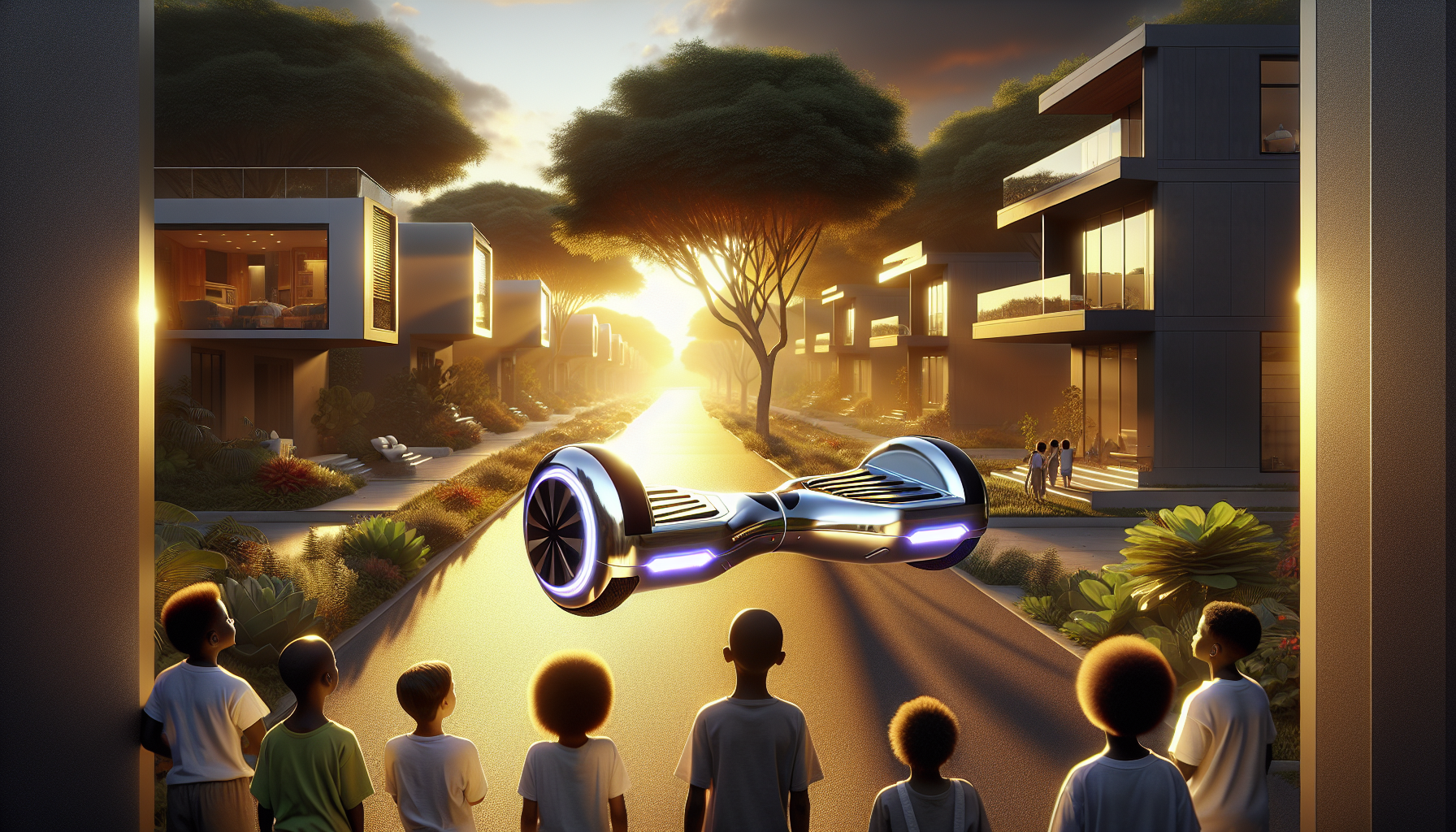
The Fascinating Journey of the Hoverboard
The concept of a hoverboard has long captured the imaginations of enthusiasts and inventors. Especially after its iconic debut in the film Back to the Future II, many fans eagerly anticipated that hoverboards would become part of our daily lives by 2015. Yet, as that year has come and gone, the dream of hoverboards as a practical mode of transportation still seems to hover just out of reach.
Unleashing the Power of Magnetic Suspension
One of the most innovative approaches to hoverboard technology has emerged from the creative mind of inventor Colin Furze. By utilizing magnetic suspension, Furze has crafted a unique prototype of the hoverboard. This design employs powerful neodymium magnets to create a repulsive force that allows the board to levitate above its surface. Such ingenious use of magnetic levitation not only achieves the desired floating effect but also brings us closer to the dream of seeing functional hoverboards in everyday use.
How Colin Furze’s Hoverboard Functions
The mechanism behind Furze’s hoverboard design is fascinating. It consists of large neodymium magnets affixed to both the longboard’s base plate and its wooden deck. The interaction between these magnets generates a repulsive force, allowing the board to hover slightly above the ground. Initially, Furze experimented with rods and linear bearings for stabilization. However, these methods led to excessive vibrations, prompting him to switch to a longboard design, which not only provided a smoother ride but also maintained the aesthetic appeal associated with hoverboards.
The Challenges of Magnetic Levitation
Despite the promising potential of magnetic levitation, the journey to a stable hoverboard has its hurdles. One significant challenge is managing the inherent instability resulting from magnetic repulsion. As noted by Furze, while the board can float, it is also prone to losing its balance easily. To enhance stability, more sophisticated setups might explore utilizing eddy currents over copper or employing superconductors along a designated path. However, the practical limitations of these technologies frequently hinder their widespread application.
Nevertheless, Furze’s endeavors exemplify the creative ways in which transportation innovations can merge entertainment with real-world application, echoing the futuristic dreams depicted in Back to the Future.
What Lies Ahead for Hoverboarding
As we continue to advance in technology and creative thinking, the dream of a truly functional hoverboard inches closer to reality. Methods like magnetic suspension could act as a catalyst for a new era of personal transportation. Imagine effortlessly gliding through your neighborhood, much like our beloved time-traveling icons.
Recently, the intrigue surrounding hoverboards has been rekindled, largely due to innovative online creators like Colin Furze. He successfully merges imagination with technology, generating excitement about the future possibilities of hoverboarding.
Embarking on Your Hoverboard Journey
If the allure of hoverboards has piqued your interest, numerous kits are available online to help you dive deeper into the world of magnetic suspension and neodymium magnets. However, safety should always be your top priority when experimenting with these powerful materials.
Conclusion
The world of hoverboards is not merely a whimsical fantasy; it represents a fascinating intersection of human creativity and technological progress. Keep an eye on emerging trends, and perhaps in the near future, hoverboards will become a viable mode of transportation.
For more insights on innovations in transportation, check out this article on The Verge that breaks down the latest hoverboard advancements.
Additionally, for background research, visit a comprehensive study on magnetic levitation by ScienceDirect.
Related Reading
Source: www.popculturenonsense.com